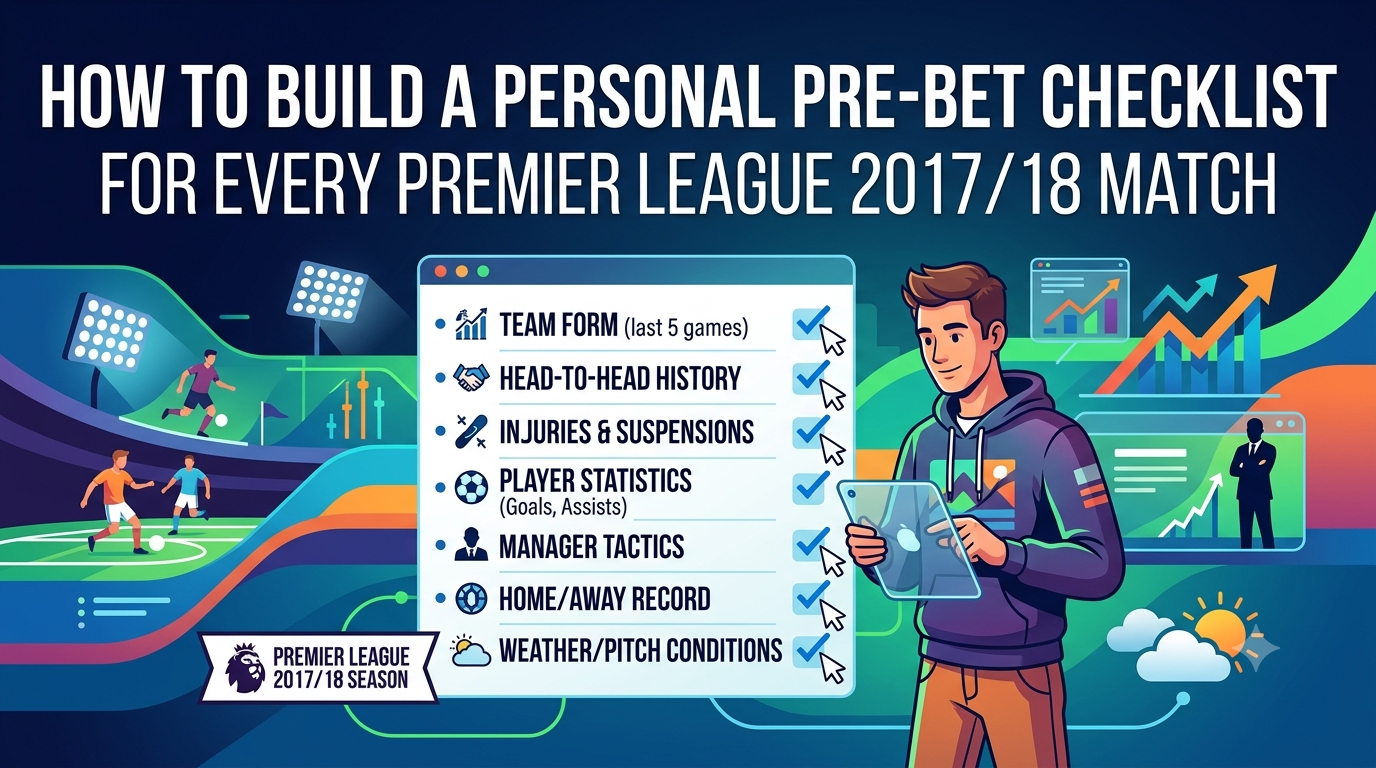
Consistency in betting rarely comes from better predictions alone—it comes from better processes. During the 2017/18 Premier League season, bettors who relied on structured checklists reduced impulsive decisions and improved long-term clarity. A checklist acts as a filter, ensuring that every bet passes the same standards before execution.
Why a Checklist Improves Decision Quality
A checklist reduces variability in how decisions are made. The cause is standardized evaluation, the outcome is consistent reasoning, and the impact is fewer avoidable mistakes.
This shifts focus from intuition to repeatable logic.
What a Checklist Actually Needs to Do
A checklist is not a list of information, but a sequence of decisions. Its role is to confirm whether a bet meets predefined criteria, not to generate ideas.
Without this distinction, checklists become cluttered and ineffective.
Core Components of an Effective Pre-Bet Checklist
Each item in a checklist should directly influence whether a bet is placed. The goal is to eliminate unnecessary inputs and focus on decision-critical factors.
Essential components include:
- Verification of team news and lineup stability.
- Assessment of recent performance adjusted for opponent quality.
- Identification of tactical matchups affecting game flow.
- Evaluation of odds relative to estimated probability.
- Confirmation that the bet aligns with overall strategy and limits.
These components matter because they ensure that each decision is grounded in relevant analysis rather than surface-level observations.
Structuring the Checklist for Practical Use
A checklist must be quick to apply under real conditions. If it is too complex, it will not be used consistently.
A practical structure includes:
- Pre-match validation of key information.
- Identification of value or mismatch in odds.
- Risk assessment based on known variables.
- Final confirmation before placing the bet.
This sequence creates a clear path from analysis to action.
How to Avoid Checklist Fatigue
Over time, repetitive use can reduce attention to detail. The cause is familiarity, the outcome is superficial checking, and the impact is declining effectiveness.
Maintaining Checklist Effectiveness
To prevent fatigue:
- Periodically review and update checklist items.
- Remove elements that no longer influence decisions.
- Adjust criteria based on observed performance trends.
This keeps the checklist relevant and engaged with current conditions.
Applying the Checklist in Real Betting Conditions
Execution speed can challenge checklist use. In environments where a betting interface like auto ufabet allows rapid bet placement, the temptation to skip steps increases. The implication is that discipline in following the checklist becomes more important as execution becomes easier.
Common Mistakes When Building a Checklist
Ineffective checklists often fail due to poor design rather than poor intent.
Frequent mistakes include:
- Including too many items that do not affect decisions.
- Treating the checklist as optional rather than mandatory.
- Failing to update criteria as conditions change.
- Using vague or subjective criteria without clear thresholds.
- Ignoring checklist results when they contradict initial intuition.
These issues reduce the checklist’s ability to enforce consistency.
Comparing Structured vs Intuitive Decision-Making
The difference between these approaches becomes evident over time.
- Structured approach: Consistent evaluation, reduced bias, stable outcomes.
- Intuitive approach: Variable reasoning, higher susceptibility to emotion, inconsistent results.
- Structured approach: Decisions aligned with predefined criteria.
- Intuitive approach: Decisions influenced by recent outcomes or perception.
- Structured approach: Easier to review and improve.
- Intuitive approach: Difficult to analyze due to lack of consistency.
This comparison highlights the value of process over instinct.
Environmental Influence on Checklist Discipline
Observation suggests that a casino online may encourage faster decisions through simplified interfaces and quick selection options. This reduces the natural pause between analysis and action, increasing the risk of bypassing structured checks.
Where Checklists Can Fail
A checklist is only as effective as its design and usage. The limitation lies in rigid application without understanding context.
If conditions change significantly, a checklist must adapt or risk becoming outdated.
Summary
Building a pre-bet checklist for the 2017/18 Premier League season creates a structured approach to decision-making. By focusing on relevant factors, maintaining discipline in execution, and adapting over time, bettors can improve consistency and reduce avoidable errors.